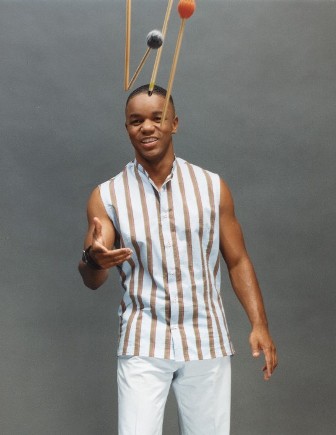
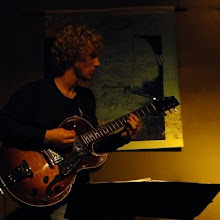
Medeski Martin and Wood's story is - like most great stories - one of humble beginnings, friendship, determination, a happy ending and a very bright future.
The trio of keyboard/organ/piano player John Medeski, drummer/percussionist Billy Martin, and bassist Chris Wood formed not in some vastly creative alternate universe, but rather in the neighborhood of Brooklyn, New York, known as D.U.M.B.O. (Down Under the Manhattan Bridge Overpass) in 1991. Medeski and Wood, students at Boston's prestigious New England Conservatory of Music, decided to move to New York City, with intent to explore the late-night underworld of the city's burgeoning jazz scene.
John Medeski, Billy Martin, and Chris Wood were looking to create music that reflected who they were, individually and collectively. The trio began experimenting with contemporary hip-hop beats that could swing as hard as jazz rhythms, yet remained essentially simple and propulsive, giving the musicians ample room to create hypnotic textures and sounds that were brimming with both improvisation and harmony. "In the beginning, as it is now, we went by gut instinct," says Wood. "We have a natural connection between us, as people and as musicians, and we just let things flow in whatever direction they went."
Gigs turned into multiple engagements, dates at small clubs led to performances at legendary New York City downtown hotspots like the Village Gate and the Knitting Factory, and soon the band was packed into Billy's van, traveling up and down the North Eastern United States. The next step was a natural one for any band - capture the music for posterity - and so MMW recorded their debut, "Notes From The Underground," which they released independently on hap-jones records in early 1991.
More gigs followed, and soon it was time for another release. This time, Medeski Martin & Wood inked a deal with Gramavision, a larger but still independent label that afforded them substantial freedom to create music the way they felt it should be played. In the summer of 1993 they released "It's A Jungle In Here," purchased an R/V, and hit the road for nearly half a year.
Communal, on-the-road living has broken up many bands, but true-to-form, MMW thrived in this potentially treacherous situation. Their secret was a unique combination of individual personalities, with each band member taking on additional roles that suited their own aptitudes and interests. As always, nothing was planned out; it just happened.
John, with his love for cooking, was the band's chef, preparing incredible meals that made life on the road more bearable. Billy, who worked well with his hands, could fix anything up to and including the band's RV. And Chris, with his head for business, took care of the group's accounting. As it was with the music, Medeski Martin & Wood balanced each other out perfectly.
"We have a certain chemistry between us, musically," says Martin, "and in addition to that we have a strong friendship that goes beyond the music. Even when we have ups and downs, the music and our friendship carries us through."
1994 saw the release of "Friday Afternoon in the Universe," and by 1995 it seemed like MMW was truly touring the universe, as their concert itinerary spread out and around the entire United States, and into Europe and Japan. In 1996, the band released their final Gramavision disc, "Shack-Man," which they celebrated with an 8-week Monday night residency at New York's Knitting Factory.
With much fanfare, the band then signed with another record label - the legendary jazz imprint Blue Note Records. At the turn of the new millennium, they released their all-acoustic album "Tonic," named for the Lower East Side club (and former kosher winery) where it was recorded. The band's affiliation with Blue Note resulted in three discs (plus a best-of set), and found them again pushing their sonic boundaries, incorporating percussionists, horn sections, and turntables into their already potent sound.
Which brings us to the here-and-now. Medeski Martin & Wood are no longer signed to anyone else's record label; they have come full circle by establishing their own label, Indirecto Records, as an outlet for their music. Which, quite happily, brings them neatly back to the way they did things in their formative years. Releasing their own music, their own way, in its own time.
The trio's first Indirecto release, "Out Louder," is a four-way collaboration with guitarist John Scofield, which true-to-form is heavy on group improvisation, irresistible grooves, rich harmonies, and strong melodies. While nothing definite is planned - as always, the band are taking each day and each opportunity as they come - it is possible that "Out Louder" could be the first in a series of independently-released projects that Medeski Martin & Wood will do in collaboration with other artists.
"By having our own label, we can make music however we want, and make as much as we want," explains Medeski. "In the history of man, recorded music is just a blink of the eye, just a small part of that vast history. The real thing is playing music live, and that is what we do. Beyond that, we'll be putting out recordings as often or as infrequently as we want."
The band also plan another first - a disc of children's music titled "Let's Go Everywhere" - set for release in early 2007 on the Little Monster/V2 label that promises to be as engaging for their established fan base as it is for the kids. "It's got everything, instrumentals, vocal songs, our kids are singing on it" says Wood.
Plus, there are the usual side projects going on, creative outlets which all three band members say serve to strengthen and add to the sound of the trio when they converge. Medeski Martin and Wood live in our world, playing music that reflects their surroundings and communities. At the same time, they are a small world unto themselves, where creativity and spontaneity are honored, revered, and encouraged. And the world-at-large is a much better place for it.
Chris Potter has long been touted as one of his generation's most talented performers. Even as a teenager, well before he moved to New York, he was named an heir to the traditions of Charlie Parker. In spite of the praise, Potter has been a self-driven individual striving to satisfy his own preoccupation with music.
Music was a constant part of Potter’s life growing up. He was born in Chicago, but by age three he moved to South Carolina. He grew up in the south, but the influence of the big city remained in his household. His family had a "quality record collection” including, among others, Bob Dylan, Buddy Guy, and the Beatles. These became Potter's earliest influences.
For Potter listening was never enough. He was interested in creating music. "I always had to play it." Whenever his family went somewhere where there was a piano, he had to noodle around on the instrument. He would figure out the melodies he'd heard on records being played at home, but Potter was also keen to figure out his own ideas, improvising long before he had any formal training.
As he got older, he discovered the more obscure parts of his parents' collection: Miles Davis, Charles Lloyd, and Dave Brubeck. Potter says it was the tone of Paul Desmond's saxophone on the Brubeck Quartet's legendary album Time Out, which inspired him to take up the instrument.
By age ten he began playing alto saxophone because, at the time, he “was a little small to play the tenor. As soon as I got it I tried to figure out how to play all those tunes on Time Out, and I had some really helpful people early on: my elementary school music teacher and my first saxophone teacher. They were very happy to show me they were improvising over a form and what notes were in a scale and the basic stuff, and I was off and running. I was just obsessed.” At this point, Potter's saxophone influences were primarily the early figures of the Ellington band: Johnny Hodges, Paul Gonsalves, Ben Webster, Harry Carney. “I wasn’t really hearing Charlie Parker. I didn’t understand what he was doing. I didn’t really like it.”
Those early Ellington influences can still be heard in Potter's fat tenor sound, but by the time he was twelve, he started getting into Parker and diligently worked to emulate his sound. “It was like a light went off, and I spent a long time trying to figure out what is he doing, how is he getting that sound? A lot of what I would do would just be to play along with the records, not even necessarily write anything down, sometimes not even knowing the tune, but just trying to play along, just trying to play like they did, sound like they did, phrase like they did, figure out what notes they were using.”
By the age of thirteen he was already becoming an acclaimed musician, praised by renowned jazz educator Jamey Aebersold as a "reincarnation of Charlie Parker." At one particular Aebersold camp, he was singled out to play with the instructors instead of his peers, as they saw him as a player on their level. Looking back on it, Potter recalls it being "a little weird. The Charlie Parker reincarnation thing kind of freaked me out. There was another one of the teachers that asked me about it in private once, and I told him ‘I have no idea whether it exists or not. I certainly have absolutely no feeling that I was Charlie Parker in a previous life,’ and he said ‘yeah it’s probably just a bunch of junk, but if you are Charlie Parker, don’t take drugs this time.’"
Back in South Carolina he was a regular at a local jam session. “On Tuesday nights these guys didn’t want to hear anything except bebop, just total bebop heads, and then Wednesday nights would be just anything goes. We’d do an old standard, but then we’d play free, and then we’d play a Rolling Stones tune. So it was good to have both of those things, and then a lot of weddings. I drove all over South Carolina as soon as I could drive.”
After high school, Potter moved to New York where he began studying at the New School, and within a few months, he was invited to join Red Rodney's band. The former Parker bandmate made Bird's music a central part of the repertoire, and Potter found this to be among the best parts of his training. “It was great having the chance to play all of these Charlie Parker tunes with the guy on the record.”
Rodney was quite a character as well. By that time, Rodney had stopped smoking cigarettes or doing any drugs, but he still had a penchant for “getting away with stuff. There was something about the whole having to ‘score’ something that he still just had to do. It took the more innocuous form of, if we were getting on a plane, he would fake a limp so that he could get on first and everybody would be really really nice to him. It was that kind of stuff, but just constantly. There was always stuff like that going on.”
Rodney was also famous for posing as an Army inspection officer. This rumor grew to myth in the jazz community over the years, and Potter recalled hearing the story from Rodney “a couple times with slightly different details each time. There must be a nugget of truth in there somewhere, but it sounded pretty deep. He saw an article in the paper about this general who dropped in on Air Force bases unannounced and he thought, ‘wow, that guy looks just like me only with gray hair.’ So he died his hair gray, and he got a uniform, and he showed up at Army bases and inspected everything. That was his thing. I don’t know what exactly he got from it.”
After three or four years in Rodney’s band, Potter began to work around New York in other capacities as well. He was still just twenty-two when he began playing in the Mingus Big Band. One night, Steely Dan's Walter Becker happened to attend a performance and loved Potter's playing enough to seek him out for the upcoming Steely Dan tour.
Suddenly, Potter was thrust into huge performance venues playing for thousands of people a night. He remembers one of the interesting things about his experiences in that group was, while the band was extremely experienced, Donald Fagen and Walter Becker, the group's leaders, hadn't toured since 1972. They had since scored a number of hit albums and singles and amassed a large fan base, but they had always stayed in the studio up to that point, and they looked like "deer in the headlights" performing for such large numbers of people every night. It was the leaders who were stunned.
Fagen and Becker wanted to tour, "and they knew at this point they could ask for first class everything. The leaders were used to working in the studio, and that was about it, so to go out there every night, it’s hard for me to imagine. They were kind of like deer in the headlights looking at sold out twenty-thirty thousand people. It was very exciting and very good music. That was music that I listened to growing up to. I was familiar with most of the tunes, I just wasn’t ever expecting to actually play it.”
As Potter found himself suddenly in the top-tier of the music community, he was humbled by the people he began to work with, including Randy Brecker, Jim Hall, and Ray Brown. “Any time you have a chance to actually work with somebody you’ve listened to a lot, and to hear how they react to you. It takes a little getting used to, and it’s such a learning thing too, not just the music part but getting to know them. You start to get to know people as people as well as how they play, and it all starts to make sense. My experience also is the really great musicians are all very humble about what they’re doing because making music on the highest possible level takes a lot of dedication.”
When he was given the chance to make his first album, it was an all-star effort, featuring Jack DeJohnette, Dave Holland, and John Scofield as his sidemen. He hadn't even played with Holland before and was pleasantly surprised to see that they all showed up for the session. "I remember I was flying in from somewhere else and I was late, so those guys were sitting around for hours waiting for me. I was completely terrified for about five minutes and then we started to work on the music, and I realized it’s just like playing with my friends. We’re looking at the tunes. We’re trying to figure out what’s the best form, what should we do with the solos, what kind of feel, just completely working on the music, no weird stuff at all. It just felt completely at home. It wasn’t foreign at all. It was just a guy trying to figure out what’s the best part to play on this tune, and it just happens to be John Scofield and he has a tremendous amount of experience and a real unique voice, but that doesn’t help him when he just walks in and he’s trying to figure out what to play. He has to sit there and figure out what to play just like anyone else."
At the interview, Potter performed two solo pieces, Thelonious Monk’s “Ruby, My Dear” and the old standard “It Could Happen To You.” He has never performed a full solo concert, but it is something he’d be interested in doing and practices all the time. Playing alone informs the way he approaches improvising in a group. “You don’t want to feel like you’re relying on these other people and you’re floating over the top of it. The way that really great jazz is made is when everyone knows what’s going on and can add something informed and interesting to the conversation. The more everyone in the band has control of every aspect of it, the drummer knowing the form and the saxophone being able to take care of the rhythm without needing help, it just frees everything up.”
Potter compared group improvisation to citizenship within a community. Jazz “is the only kind of music that I know of, in history, that’s ever really had that group improvisation aesthetic. It’s really special. Philosophically too, it requires everyone to be very well informed about what the situation is, and to be considerate, but not to be wishy-washy, to jump in when needed. It’s all the kind of things that, if you look at it in another situation, can make a good citizen or a good family-member. This is the big thing behind what this music means to me. It’s a whole way of life, and the more that I’ve had a chance to work with people on the highest level you realize that’s really where it’s at. That’s the way they’re looking at it.”
While Potter’s take on improvisation was illuminating, his advice for upcoming musicians was to just keep at it. “Everybody has a different path, a different story, and that’s how it should be. Being a jazz musician, there's nothing cookie-cutter about it. It’s obviously not an easy thing to do. It’s not an easy way to make a living. I’ve been very fortunate, but I know a lot of people that are very talented. It’s not that easy, but it’s the kind of thing that if you need to do it, you need to do it. That’s how I felt from the very beginning. There wasn’t even any question really. It was just what I needed to do.”
Potter's journey follows one of those unique routes. He has been a consistent figure in jazz for nearly twenty years, garnering great admiration even as a teenager. He continues to churn out memorable performances, and as his obsession with music continues, there are sure to be many more in the decades to come.
Here are Chris Potter's two performances from the interview:
Vibraphonist-composer Stefon Harris is heralded as “one of the most important young artists in jazz (The Los Angeles Times).” He is unquestionably developing what will be a long and extraordinary career.
A graduate of Manhattan School of Music, Stefon received a B.M. in Classical Music and an M.M. in Jazz Performance. He is a recipient of the prestigious Martin E. Segal Award from Lincoln Center and has three consecutive Grammy nominations for Best Jazz Album including the 2003 release of The Grand Unification Theory (Blue Note), Kindred (Blue Note) and Black Action Figure (Blue Note). Harris.. 2004 recording, Evolution (Blue Note) features his band Blackout and was voted by Jazz Times as one of the Top 50 CDs. His forthcoming 2006 CD combines arrangements of rarely performed Ellington music with an original suite, The Gardner Meditations commissioned by The Wharton Center at Michigan State University. North Sea Jazz (Netherlands) named Harris for the prestigious International 2002 Bird Award for Artist Deserving Wider Recognition. He has been voted Best Mallet player by the Jazz Journalist Association (2005, 2004,2003, 2002, 2001 & 2000), Debut Artist of the Year by Jazz Times and Chicago Tribune, Downbeatís Critics Poll Winner for Vibraphone & Rising Star, Vibraphone (2004) Newsweek..s Best Jazz CD, Best New Talent and 1999-2000 Readers Poll Best Vibraphonist by Jazziz Magazine.
Mr. Harris has performed at many of the world’s most distinguished concert halls, including Lincoln Center’s Alice Tully Hall, The Kennedy Center, San Francisco’s Herbst Theater, UCLA’s Royce Hall, Chicago’s Symphony Center, Detroit’s Orchestra Hall, and The Sydney Opera House. He has toured and recorded with the Chamber Music Society of Lincoln Center and performed his original compositions with the Dutch Metropole Orchestra in Den Hague. An active educator Mr. Harris conducts clinics and lectures worldwide, teaches at New York University and has been Artist in Residence at San Francisco Performances and at the Isabelle Stewart Gardner Museum in Boston. He has received special commissions from The Wharton Center at Michigan State University (debuting April 2005) and The Troy Savings Bank Music Hall, which spawned The Grand Unification Theory (Blue Note).
Harris performs here in a sound check with Greg Osby at the Jazz Standard:
On the surface, Lionel Loueke would seem to be one of the least likely people to enjoy a successful career in the American jazz community. He rose from modest beginnings in West Africa and has now become a regular collaborator with icons like Herbie Hancock and Wayne Shorter and an essential part of the modern jazz world.
Growing up in the former French colony of Dahomey (now the Republic of Benin,) Loueke knew music as an integral part of everyday life. Like a pickup game of basketball or football, Loueke and his childhood friends would meet up to play in drum circles. He insists that nearly everybody played an instrument, and if they didn’t, they danced. “We play music to celebrate birth, death; any occasion, music is always there. Even as a kid, I remember playing music with other kids, but in my head it wasn’t music. It was just a part of life. At nine years old, I remember we had a percussion ensemble with nine to ten kids and one dancer, and we just played to get some coins from street to street.”
As a teenager he was first exposed to American jazz, and he remembers appreciating the openness of the music. “I liked the parts, the improvisation, the freedom in jazz. [At first,] I didn’t see the connection with African music, but I saw it later. I realized when I was playing in Afro-pop bands, I wasn’t always playing the same lines like you’re supposed to, and I was getting in trouble sometimes. My friends told me ‘you’ve got to play the same line.’ I always liked to have that freedom.”
At eighteen he moved to Côte d'Ivoire (Ivory Coast) to study at West Africa’s only conservatory: The National Institute Of Art. There he learned music theory, solfège, classical music history, and how to notate music. Then in 1994, after two years in Côte d'Ivoire, he moved to Paris to pursue jazz at the American School of Modern Music before moving again to America where he’d received a scholarship to study at Berklee College of Music.
It was at Berklee that he first met bassist Massimo Biolcati and drummer Ferenc Nemeth, who would later form the Lionel Loueke trio. Both Biolcati, raised in Sweden from Italian descent, and Nemeth, from Hungary, had studied African music extensively and the three were drawn to each other and to making music that melded their various influences. Together, they began to fuse jazz technique with motifs from Loueke’s African heritage.
In 2001, after graduating from Berklee, Loueke had an opportunity to audition for the Thelonious Monk Institute of Jazz in Los Angeles playing for a panel that included Herbie Hancock, Wayne Shorter, and Terence Blanchard. Of course he was nervous, but mostly because he felt he didn’t have a strong background in jazz to draw on and thought it unlikely he’d be selected. Rather than try to prove he was something else, Loueke simply played the music he knew. He remembers thinking, “‘man, just be yourself because I can’t impress those guys. That’s not the point. It’s about music, so I’m just going to do my best, if they like it or not,’ and they liked it.”
The audition committee was very impressed, and in selecting Loueke—along with Biolcati and Nemeth—they stood to learn as much from him, given his unique background, as he was from them.
It took Loueke a long time to synthesize the different styles of music he was exposed to and develop his own sound. While in Los Angeles, he took a semester’s worth of classical guitar lessons to refine his playing technique and he began to use his fingers much more. This allowed him to play more complex rhythmic patterns, as he now had several fingers to play at once rather than one pick, reflecting much of the popular Spanish and Puerto Rican music he remembered hearing in Benin. He began to play nylon-string guitars at this time as well, giving him a more earthy sound. “Even at Berklee I still was getting so much information and trying to digest it all. At the Monk Institute I was still getting information, but they were helping me to develop my own voice.”
Loueke’s playing went through several other transformations as he sought create sounds that mimicked instruments from Africa. One came through the use of effects pedals. “I use my musicality, of course I use my pedals, and most of the time I use pedals that are not made for that type of sound. Because I try to imitate a lot of instruments, especially African instruments, there’s no pedals made for that, so I can use a wah-wah or wammy pedal to get that sound.”
(During?) At the interview, Loueke was kind enough to demonstrate his particular style of playing, which included a piece of pink paper placed between the strings by the bridge of his guitar, dampening the resonance of the instrument. “I came up with that because I wanted to get a sound close to the kalimba—thumb piano—so the paper between the strings makes the strings vibrate differently, and before I got to that, I used a plastic bag, a comb: I like to try different things. I was playing in Philly, and in the dressing room they had pink paper. Usually before I get on stage I get ready and get a piece of paper. That paper worked so well, I asked them if I could take the whole block, and they said yes, so I’m still using it.”
Singing is another major element of Loueke’s sound. “I don’t consider myself a singer, but I do use my voice like an effect, like a pedal device on my instrument. Because every single note I play I always sing, it helps my phrasing to play better. A few years ago I realized that everything I was playing and singing, after a solo I couldn’t breathe. I questioned myself, and the answer was there: I was playing too much.”
In between singing notes, Loueke will often add click noises with his mouth, which serve the function of a percussion instrument. He says that the click sounds came about in “the most natural way. I used to listen a lot to music from South Africa and it’s part of the language. I don’t speak that language, but I get inspired by the language. If I sing one note, a click, and have a different thing going on the guitar, I can have three parts going on at the same time. For me it is just percussion because I don’t speak that language.”
As Loueke develop personally, so did the sound of his trio. Coming from an institutional background, he used to always notate his music for the other members of his group to read as they were learning new pieces. Sometimes the time would be written with thirteen or seventeen beats a measure, and they were not all on the same page about how to feel that. Each of them had their own interpretation, so now he tends to teach his music by (‘rote’ is the word) wrote, harkening back to his roots. “When you play music, it’s not about the paper. It’s not about the chart. It’s about the ears. That’s how we grew up in Africa. Of course, it’s important to learn music, to learn how to notate, but I think the most important thing is to develop your ears.” Loueke finds that his music also translates well with audiences. “Talking is not my thing. I like to play. That’s what I do. That’s how I connect with people. Even when people don’t even speak my language or don’t understand what I’m saying, they still can get a feeling, get an idea. People always go home with something in their mind. It’s important, as an artist, to be able to share that without words. Of course, I can do that with words, but I personally prefer to let the music talk.”
Amidst the wide variety of music available today, Loueke’s truly sticks out, and his path to that destiny could have never been planned. “I never thought I would meet one day Herbie Hancock: I mean even shake his hand, or Wayne Shorter. I want to say it’s a dream come true, but I can’t even say that because it wasn’t even part of my dream.”
Unlikely as seems, even to Loueke himself, he is now an established member of the jazz community, with two solo releases for Blue Note Records, and an appearance on Herbie Hancock’s Grammy-award winning effort: The River. He has an open mind about music, believing that “every music has a message, even if you don’t get it.” He is sure to be around, influencing those within and outside the jazz world for many years to come.
Here are the two pieces Lionel Loueke played at the interview:
Born in 1946 in Wolverhampton, England, Dave Holland was a steady figure on the London jazz scene when Miles Davis saw him at the fabled Soho jazz club Ronnie Scott’s in1968, playing in a combo that opened for the Bill Evans Trio. “Miles heard something in his sound and his ideas," recalled Jack DeJohnette, who was Evans’s drummer on the date. A month later, Holland was on the bandstand with Davis at Count Basie’s Harlem nightclub. He then joined the rhythm section on Filles de Kilimanjaro, and the revolutionary In a Silent Way and Bitches Brew sessions. It was a heady two years, but Holland was quickly developing his own ideas about music.
Eager to pursue his own radical new sounds, Holland did what many of his peers would not have contemplated. He quit Davis’ band, giving up the arena gigs at vast venues like Madison Square Garden to commit to the creation of his own music. And then he got even busier. The 1970s found Holland prolific. Solo, and in collaboration, he became a dominant voice in the new music. Along with fellow Miles alum Chick Corea, he formed the shortlived supergroup Circle, and then joined Rivers for the epochal Conference of the Birds. The 1972 album, one of Holland’s first for the ECM label, was a quartet session that also featured multi-reedist Anthony Braxton and drummer Barry Altschul (both of Circle). Inspired by the birds that frequented the yard of Holland’s London home, and a 12th century Persian epic written by Farid ud-Din Attar, the album became a classic: outward-thinking music that made the avant-garde swinging and coherent, suffused in feeling yet attentive to form. Holland also explored the essence of his instrument in the duo record with Barre Phillips, Music for Two Basses (1971) and the remarkable solo album Emerald Tears (1977).
It was Holland’s strengths as a collaborator that marked many of his most notable efforts of the decade. His ongoing association with Sam Rivers, Anthony Braxton and trumpeter Kenny Wheeler saw Holland’s presence on a slew of important sessions, including a pair of improvisatory duets with Rivers and multiple credits on Braxton’s Arista recordings, such as the splendid New York (Fall 1974). Joining forces with DeJohnette again and guitarist John Abercrombie, Holland joined the collective Gateway trio from 1975-77 recording a pair of albums for ECM. (The trio recorded twice again in the 1990s and continues to play the occasional concert).
Ever versatile, Holland also recorded with folk and rock musicians. As the only acoustic bassist living in Woodstock, NY, at the time, the Englishman was in demand. Michael Cuscuna, who produced several Braxton sessions with Holland on board, solicted his talents for Bonnie Raitt’s Give It Up. Holland also got in the studio with bluegrass legend Vassar Clements and John Hartford. (It was in the same spirit that Holland found himself jamming with Jimi Hendrix one fleeting night in 1969 with drummer Buddy Miles).
Holland formed his first working quintet in 1983, featuring alto saxophonist Steve Coleman, trumpeter Wheeler and trombonist Julian Priester. A series of albums recorded over the next four years – including Jumpin’ In, Seeds of Time, and Razor’s Edge – laid the foundation for Holland’s songbook.
Subsequently, he formed the Dave Holland Trio (with Coleman and DeJohnette) for the 1988 album Triplicate, and teamed with Coleman, electric guitarist Kevin Eubanks and drummer Marvin “Smitty” Smith for Extensions in 1989.
The bassist also continued to enjoy strong collaborations with a vast range of his peers, often connecting with celebrated figures from the previous generation of jazz icons. The following year, Holland got together in a unique trio of jazz legends, drummer Billy Higgins and pianist Hank Jones to record The Oracle – a genuine power summit. Other stellar projects included Question & Answer with Pat Metheny & Roy Haynes as well as Like Minds with Gary Burton. This has been a consistent pattern in Holland’s career. During the ‘90s, he renewed an affiliation, begun in the 1970s, with Joe Henderson, joining the tenor saxophonist on So Near (So Far), Porgy & Bess, and the Joe Henderson Big Band. Likewise, Holland reunited with vocalist Betty Carter, touring and recording the live album Feed the Fire. Fellow Davis album Herbie Hancock invited Holland to tour with him in 1992, subsequently recording The New Standard, Holland joined Hancock’s band again in 1996 and, more recently, was part of the sessions for River: The Joni Letters, winner of the 2008 Grammy for Album of the Year.
Holland also formed his current quintet, which includes tenor saxophonist Chris Potter, trombonist Robin Eubanks and, a more recent addition, drummer Nate Smith. Among their notable recordings are Not for Nothin, Prime Directive and Extended Play.
In 2005, Holland formed Dare2 Records, after a 34-year relationship with ECM Records, the label where he became a signature artist. Originally, Holland created Dare2 Records as an imprint “to have more control over the entire process of releasing an album,” he says. “But in the long term, there’s a lot of promise in making music this way, especially with the changing environment in the recording industry.” Sharing the bandstand with the best of a younger generation of players in his fan-favorite quintet, he now has three albums out on Dare2: the Grammy-award winning Overtime (2005), Critical Mass (2006) and Pass It On (2008). The debut recording from the Dave Holland Octet, entitled Pathways, will be released in the fall of 2009 on Dare2 also. As he has in his music, Holland has embraced change and new ideas in business like few of his generation or younger.
Here is a clip of Dave Holland playing at the Montreal Jazz Festival with his quintet, including our interviewee from two weeks ago, Chris Potter.
A world-class soloist, accomplished composer and formidable bandleader, saxophonist Chris Potter has emerged as a leading light of his generation. Down Beat called him "One of the most studied (and copied) saxophonists on the planet" while Jazz Times identified him as "a figure of international renown." Jazz sax elder statesman Dave Liebman called him simply, "one of the best musicians around," a sentiment shared by the readers of Down Beat in voting him second only to tenor sax great Sonny Rollins in the magazine's 2008 Readers Poll.
A potent improvisor and the youngest musician ever to win Denmark's Jazzpar Prize, Potter's impressive discography includes 15 albums as a leader and sideman appearances on over 100 albums. He was nominated for a Grammy Award for his solo work on "In Vogue," a track from Joanne Brackeen’s 1999 album Pink Elephant Magic, and was prominently featured on Steely Dan’s Grammy-winning album from 2000, Two Against Nature. He has performed or recorded with many of the leading names in jazz, such as Herbie Hancock, Dave Holland, John Scofield, the Mingus Big Band, Jim Hall, Paul Motian, Dave Douglas, Ray Brown and many others.
His most recent recording, Ultrahang, is the culmination thus far of five years’ work with his Underground quartet with Adam Rogers on guitar, Craig Taborn on Fender Rhodes, and Nate Smith on drums. Recorded in the studio in January 2009 after extensive touring, it showcases the band at its freewheeling yet cohesive best.
Since bursting onto the New York scene in 1989 as an 18-year-old prodigy with bebop icon Red Rodney (who himself had played as a young man alongside the legendary Charlie Parker), Potter has steered a steady course of growth as an instrumentalist and composer-arranger. Through the '90s, he continued to gain invaluable bandstand experience as a sideman while also making strong statements as a bandleader-composer-arranger. Acclaimed outings like 1997’s Unspoken (with bassist and mentor Dave Holland, drummer Jack DeJohnette and guitarist John Scofield), 1998’s Vertigo, 2001’s Gratitude and 2002’s Traveling Mercies showed a penchant for risk-taking and genre-bending. "For me, it just seemed like a way of opening up the music to some different things that I had been listening to but maybe hadn’t quite come out in my music before," he explains.
Potter explored new territory on 2004’s partly electric Lift: Live at the Village Vanguard (with bassist Scott Colley, drummer Bill Stewart and keyboardist Kevin Hays) then pushed the envelope a bit further on 2006’s Underground (with guitarist Wayne Krantz, electric pianist Craig Taborn and drummer Nate Smith). As he told Jazz Times: "I've wanted to do something more funk-related...music that seems to be in the air, all around us. But also keep it as free as the freest jazz conception."
He continued in this electrified, groove-oriented vein with 2007’s Follow The Red Line: Live at the Village Vanguard (with guitarist Adam Rogers replacing Krantz in the lineup). Says Potter of the adventurous new path he’s carved out for himself with his bass-less Underground quartet: “There was a point where I felt like the context I had been using before wasn’t quite working to express what I wanted or to move forward in some kind of way. My aesthetic as a saxophonist has always been based in Bird and Lester Young and Sonny Rollins and all the other greats on the instrument. What I’ve learned from them in terms of phrasing, sound, and approach to rhythm I’ll never outgrow. However music’s a living thing; it has to keep moving. I’ve been touched by many forms of music, like funk, hip hop, country, different folk musics, classical music, etc., and for me not to allow these influences into my music would be unnecessarily self-limiting. The difficulty is incorporating these sounds in an organic, unforced way. It helps me to remember I want people to feel the music, even be able to dance to it, and not think of it it as complicated or forbidding. If I can play something that has meaning for me, maybe I’ll be able to communicate that meaning to other people, and the stylistic questions will answer themselves.”
Looking back over his 20 years since arriving in New York, Potter says, “I’ve had the chance to learn a lot from all the leaders that I’ve worked with. Each gave me another perspective on how to organize a band and make a statement. It’s taught me that any approach can work, as long as you have a strong vision of what you want to do.”
Christian McBride is only thirty-seven, but he's already made a remarkable impact on the jazz community. He's been a high profile musician for nearly twenty years, and at this point, he could do just about whatever he wants. He came into the interview looking savvy, dressed in a dark suit and twirling a cigar as he nonchalantly answered questions about his illustrious career, but he'd rather not sit back and rest on his laurels. He continues to push himself and those around him in a range of styles and roles, as performer, teacher, creative chair for jazz with the Los Angeles Philharmonic, and co-director of the National Jazz Museum in Harlem.
McBride, who grew up in Philadelphia, has always had music in his blood. His father and great uncle were both professional musicians. "My dad, up until the time I was six or seven years old, was primarily an electric bass player playing in a lot of the great legendary Philly soul groups like Blue Magic, and The Delfonics, Billy Paul, Major Harris--and by the time I got old enough to really appreciate what he was doing. He started working with Mongo Santamaria, so he kind of left the R&B world and started getting into the jazz scene."
His great uncle was playing in a very different setting with avant-garde jazz musicians such as Khan Jamal, Sunny Murray, and Byron Lancaster. On his mother's side, he had another uncle who worked for one of the city's popular African-American radio stations: WHAT. "Between seeing my father play with Mongo, hearing my great uncle playing with the guys from Sun Ra’s band, and then going to an R&B show, I was just surrounded by music every minute of the day.
When he was nine, McBride's mother bought him an electric bass. "I knew the minute I touched it, that’s what I was going to do for the rest of my life." His father, who was often on the road, came by to give him his first lesson, showing him how to play 'Papa Was A Rolling Stone.' "I remember thinking, 'wow, this isn’t too difficult. Show me something else.' He showed me a few more songs, and I think I had that electric bass on my body for the next three days straight."
For the next two years or so, McBride’s approach to learning was mostly picking up bass lines he could hear on the radio. When his mother saw that he'd become passionate about that instrument she made a point of sending him to Pepper Middle School, which had one of the better music programs in the city.
When it came to picking an instrument to play in the school orchestra, McBride applied the logic of an eleven-year-old, and decided it would be dumb to take up the acoustic bass. "Why would I want to play two basses, I already play the electric bass." Instead, he tried the trombone, but when he couldn't produce a single sound from the instrument, the teachers suggest he give the acoustic bass a try. After scoping out the instrument, he realized it was just the same as an electric bass, only twice as big and turned on its side, so he started playing the bass line to “Beat It,” and all the teachers looked around and said, “He can play that!" to which Christian quipped, “It’s just a big electric bass, it’s nothing.”
Shortly thereafter, McBride began his formal training on the instrument. His first teacher, Margie Keefe, was actually a cellist, but she introduced him to the beginner books like the Simandl Method and he started learning to read music and the rudiments of music theory. "Slowly but surely I fell madly in love with the acoustic bass, and I'm forever grateful that [my teacher] took that trombone out of my hands."
It was in middle school that McBride also first got into jazz. All his teachers were "professional musicians, and they would bring their Real Books to school. One of the teachers, Mark Johnson, showed me how to read a chord sheet. He brought in Satin Doll, Misty: easy songs like that, which I could pick up quickly."
Once it became apparent that McBride had taken a real interest, his great uncle called and said, “get over here right now. I’ve got something for you.” As McBride recounted, "I went over to his house, and, I’m not exaggerating, his record collection was about as big as this store. He had every record known to man, so he said, 'you know who Paul Chambers is?' 'No.' 'Well I’m going to show you right now.'”
It was 1983, and like every other eleven-year-old, McBride was listening to Michael Jackson, Prince, Cindy Lauper, and everything that was hot at the time. Unlike many jazz aficionados, who can be "dogmatic about what the music is and what other musics aren’t," McBride's great uncle was encouraging of him enjoying all different kinds of music. He remembers being told, “I know you love Michael Jackson, I know you love James Brown, Prince. They’re ‘bad’ too, but just add this on so you can see where it all comes from.” It was this strong influence that led McBride to embrace all different styles of music.
The following year, Ms. Keefe had him audition for the all-city and Settlement Music School jazz bands, which were usually reserved only for senior high school students. McBride showed an exceptional ability on the instrument though, and he made it into both.
It was in the Settlement group that he first met Joey DeFrancesco. McBride remembers, "he was a year older than me, and for the next year, we became inseparable. He was about my earliest musical compadre. We played together every day, and the way he plays now, he played like that back then."
Once they reached high school, attending Philadelphia's High School for Creative and Performing Arts, the two still felt like outsiders, listening to jazz, and constantly conversing about "the Basie band, or Lester Young, or Sarah Vaughan, or Miles, or in Joey’s case a lot of Jimmy Smith, Jack McDuff, and Charles Earland. I probably know about more organ players than I do bass players hanging out with Joey."
Soon McBride also became friends with Ahmir Thompson [commonly known as ?love, drummer of the popular hip-hop group The Roots], but the three fledgling musicians never hung as a trio. "It would have made sense that we do that, but Joey was a hard-core jazz-head, Quest, was a hardcore funk-head, and I was always caught in the middle philosophically anyway. So, I would hang and play standards with Joey, and then I’d hang with Ahmir, and we’d talk about James Brown all night long."
Around that time, McBride also began playing regular gigs with an old Philadelphia stalwart:, Joe Sudler. Sudler had actually replaced Harry Carney in the Ellington band after Carney passed away and then went on to lead a local big band in Philly, "which was like a rite of passage for all the young cats growing up in Philly. The band was mostly made up of the members of the MFSB band: guys like Zach Zachary...Uri Caine…John Swanna, Bob Howe. All of these local Philly legends were in that band, so Joe started using me just after my fourteenth birthday. It was great because it was real life. I really had to learn how to be a professional quickly. We played a lot of parties, weddings, bar mitzvahs. The experience of that band was unprecedented."
As McBride began to find success as a young musician, he had a team of mentors and teachers who helped him achieve. Among them were such respected Philadelphia educators as Lovett Hines, who drove him to and from all of the gigs with Joe Sudler's band, and Dr. George Allen, the musical director at Overbrook High School, who first introduced him to Wynton Marsalis. Then there was Robert Lamdon, the current baritone player in the Ellington band, who became McBride's "number one mentor." Lamdon turned him onto more modern jazz like Woody Shaw, Wayne Shorter, and McCoy Tyner, and helped him to remember harmonic progressions without a Real Book.
By the time McBride was graduating from high school, he found Philadelphia stultifying. "I've always said this with great trepidation, but it bothered me a lot--it still bothers me to a certain extent--that a town like Philadelphia, which has such a strong and great legacy of jazz, [was full of musicians that] to me, didn't think big. They were satisfied playing the same songs on gigs. It felt like nobody was really thinking about showing how great they really were. So, I was in Philly just biting my fingernails off just thinking, 'I can't wait to go to New York because I want to see just how good I can really be. I want to see the baddest cats who can challenge me, and make me feel bad, so I can work harder and get better.'"
In 1989, McBride moved to New York and began studying bass at Julliard with the legendary instructor Homer Mensch, but his studies were soon pushed to the backburner, as he was offered a position in Bobby Watson's band. He had been in New York for all of two weeks, "and Bobby came and literally pulled me out of school one day and said, you're working at Birdland this weekend with James Williams and Victor Lewis. I thought, 'oh man, no warm up gig, no minor league game. I got called right to the bigs.' I started working around town a lot, and needless to say, my schoolwork suffered because I'd be playing at the Village Gate, or Bradley's, or the Angry Squire till three, four o'clock in the morning, and I had to be at orchestra rehearsal at eight. It was very tough."
McBride continued to attend classes, but by the end of his freshman year, he dropped out to begin a career, working with Freddie Hubbard, Sting, Joe Henderson, Herbie Hancock, Carly Simon, James Brown, Chick Corea, and countless other luminaries.
Ray Brown was a particularly big influence. "The first time I went to see Ray Brown play live I was with Benny Green, and we went to the Blue Note. He was so nonchalant, dancing with the bass, looking around, giving verbal instructions, and he got this big fat woody sound from the instrument, which was coming mostly from the instrument, not the amplifier. He didn't seem to be straining himself, yet he was still putting a nice muscle into the instrument. That floored me. When he said he was going to put together a band specifically for myself and John Clayton called SuperBass, that was the ultimate honor. "
He is quick to point out that not all his great memories were with legends over sixty-five. "Some of my greatest moments as a musician have come with my peers. For many years, the Christian McBride Band, with Ron Blake on saxophones, Geoff Keezer on keyboards, and Terreon Gully on drums, we felt like superheroes every time we went on stage because we could morph into straight ahead guys or into grunge-rock guys in the same tune. We would all look at each other and give our Green Lantern ring flash."
Playing in Freddie Hubbard's band was a particular thrill; or, putting it in terms any ‘video gamer’ would understand, like "playing Madden for the first time on the ‘All-Madden’ level. It's like everything's moving fast, more interceptions, you can't bust those eight, nine-yard runs. You're getting stuffed at the line of scrimmage. That's what it was like playing with Freddie Hubbard. To hear somebody play a trumpet like that was just mind-boggling. You listen to him and you go, 'well, are we supposed to match that? Are we supposed to play like he plays? That's not going to happen.'"
McBride did love the challenge though. "I enjoy music that makes me sweat a little bit. I've seen a lot of musicians do this once they get to a certain place in their careers. They'll try to manage the music to make it so they don't have to work so hard. I plan on never doing that."
While he continues to challenge himself, McBride always wants to give back to others. "I always made a very conscious decision that if I was ever in a position where I could help to inspire some young teenager like all those guys did for me: that's a no brainer for me. I can't tell you how important it was when all those great Philly musicians took the time to hire me at fourteen and fifteen and let me come out there and make mistakes, and stumble, and learn, and give me another shot two, three, four, or five, or six times over. I keep them in my heart every single day, so I'm more than happy to pass that on to some up and coming cats."
Christian McBride has already established a legacy to be proud of and a lasting impression on both jazz and the larger musical world, but as he continues to challenge himself, those of us lucky enough to encounter his playing and vivacious personality should look forward to plenty more exciting projects over the years to come.
Here are some extra anecdotes from the interview, with McBride discussing moving to New York, his process for composing, and working with such jazz icons as Ron Carter, Hank Jones, Joe Henderson, and Illinois Jacquet:
Lionel Loueke grew up in what he has described as a family of poor intellectuals in the West African country of Benin. He began playing percussion instruments around the age of 9, but was influenced by an older brother who played guitar, which he began playing himself in his late teens. It took Loueke a year to earn the $50 he needed to buy his first guitar. However, he could not afford to replace the strings, which had to be special-ordered from Nigeria. Instead, he soaked his strings in vinegar to keep them clean. When the strings broke, he had to replace them with bicycle brake cables that were very hard on his fingers. Loueke got his first professional job by accident; when a club manager heard him playing a guitar he had grabbed off the bandstand during a break and offered him work. He played African pop music, but discovered jazz when a friend returned from Paris with a copy of an album by jazz guitarist George Benson.
This inspired Loueke to study jazz in Paris. He then won a scholarship to study at the Berklee School of Music in Boston. In 2001, Loueke auditioned for the Thelonious Monk Institute of Jazz at the University of Southern California. He was selected in a worldwide search by a panel of judges including jazz musicians Herbie Hancock, Terence Blanchard and Wayne Shorter. He attended the Thelonious Monk Institute of Jazz until 2003.
In 2002, while still at the Thelonious Monk Institute, Loueke began playing with trumpeter Blanchard. Loueke was featured on two albums with Blanchard for Blue Note Records, Bounce (2003) and Flow (2005). He subsequently has had a prolific career as a sideman. He has performed on jazz pianist Herbie Hancock’s albums Possibilities (2006) and River: The Joni Letters (2007), and also worked with Kenwood Dennard, George Garzone, Bob Hurst, Alphonso Jonhson, Angelique Kidjo, Dianne Reeves, Cassandra Wilson, Wayne Shorter, Jeff 'Tain' Watts, Charlie Haden, Richard Bona, Nathan East, Vinnie Colaiuta, Marcus Miller, Sting, Brian Blade, John Patitucci, Terri Lyne Carrington, Kenny Garrett, Roy Hargrove, Santana, Dennis Chambers, Magos Herrera, and Gretchen Parlato.
Loueke formed the trio Gilfema with Massimo Biolcati (bass) and Ferenc Nemeth (drums), classmates from the Berklee College of Music, and released two albums on the ObliqSound label: Gilfema (2005), and Gilfema + 2 (2008), featuring clarinet players Anat Cohen and John Ellis. Under his own name, Loueke recorded the live album In a Trance in 2005, and Virgin Forest, which was released by ObliqSound in 2006.
Loueke made his major-label debut in 2008, when Blue Note released his album Karibu. NPR.org praised the guitarist for his fusion of traditional African music with modern jazz harmonies, unique vocal inflections, and complex time signatures. The album features Biolcati and Nemeth, as well as guest appearances by Hancock and Shorter. His latest album, Mwaliko (2010), is a collection of duo and trio performances that mixes traditional West African music and jazz. Guests include fellow Benin native Kidjo, Cameroonian bassist and singer Richard Bona, bassist Esperanza Spalding, and drummer Marcus Gilmore, doing a version of Shorter’s classic composition "Nefertiti".
In early 2008, Loueke's "Kponnon Kpété" won in The 7th Annual Independent Music Awards for Best Traditional World Song.
Though Jack DeJohnette may be known to most as one of the preeminent jazz drummers, making notable contributions to groups led by Charles Lloyd, Miles Davis, and Keith Jarrett, he sees himself as a messenger of peace and joy. Whether on drums, piano, or any other instrument, DeJohnette would most like to give people the inspiration to relax and find happiness in life, if only for the time they’re listening.
He originally fell in love with music through his uncle, Roy Wood, one of the first African-American disc jockeys in Chicago. He fondly remembers sitting by his uncle’s Victrola: cranking it up and then dropping the needle, with an “arm that weighed about ten pounds.” They’d listen to the great big bands of Duke Ellington, Tommy Dorsey, Benny Goodman, and Count Basie.
By the time DeJohnette was in high school, his uncle had moved to a jazz station, and he got to hear all the latest records as they came out. By that time, Jack had been singing lead in a doo-wop group, regularly competing in talent shows and playing in local dives, but he was inspired by the hip new jazz he heard through his uncle. DeJohnette remembers that back then, “it was cool to have jazz records in high school.”
As he became more invested in music, Jack found new outlets for his talent, playing piano in jazz and dance groups; and, in a real stroke of luck, the drummer from one of these bands left his kit at DeJohnette’s house once for several months, and he began to mess around on them in his spare time. He’d always been interested in the instrument and studied the drummers at jam sessions. With his interest growing, he got a few books and began to practice rudiments while watching television.
The work soon payed off as he started getting hired to play gigs on both piano and drums. It was after playing a bit with Eddie Harris that he finally decided to make drums his primary instrument. Harris told him one night after a gig, ‘you play good piano, but something else is happening on the drums. I play all the other instruments too, but I have to make one instrument be my voice. If you decide to stay with drums, make drums your main voice. You’re gonna be something and go somewhere.’
Working around Chicago and hanging at the clubs, DeJohnette took every opportunity he could to hang with the major artists who came through the city. Among these was John Coltrane, who played at a small club where DeJohnette regularly went to jam. When Elvin Jones didn’t show for the last set, the owner suggested the DeJohnette sit in. Coltrane and the other musicians didn’t bat an eye, and DeJohnette fit right in on “I Want To Talk About You” and “Mr. P.C.” During the set, he realized why Jones was so forceful on the drums, as Coltrane just “soaked up all of the energy and barreled forward like a train.” To his dismay, Jones showed up just in time to play “My Favorite Things,” thanking the young drummer for filling in.
It was Muhal Richard Abrams who pushed DeJohnette to take the leap and head to New York in 1964. As DeJohnette recalled, “a lot of people were afraid to come to New York because it was the big apple and really rough, and he just said ‘don’t worry. It’s just like Chicago, only more of it.’”
With that, DeJohnette took off on a Greyhound bus, taking only $27 and a Gretsch set of drums and cymbals with no cases. He’d initially only planned to stay for a weekend, but in that weekend, he went to Minton’s, jammed with Freddie Hubbard--whom he’d met when the Jazz Messengers came through Chicago–and was noticed by organist John Patton, who offered him a gig on the spot. With that boost to his confidence, DeJohnette felt he could make it, and decided to stay in New York indefinitely.
He became a regular at plenty of jam sessions, and as word got around that there was a hot new drummer in town, he began to get regular work. Within a few weeks, DeJohnette had enough money to get his own apartment on the Lower East Side.
His first big gig was in Jackie McLean’s band, playing week-long stands around the country in cities like Baltimore and Pittsburgh, promoting McLean’s latest record release.
DeJohnette soon got a chance to play with Coltrane’s new avant-garde group featuring Coltrane’s wife Alice, Pharoah Saunders, Jimmy Garrison, and Rasheed Ali. It was one of the most intense gigs he played in his life, and he found that Coltrane , and others of that generation, like Miles Davis, Sonny Rollins, and Thelonious Monk, never gave much direction. “Not that much was talked about in the music. There was just an inner-knowing about things. The younger generation now is more accessible, but guys didn’t talk that much about it because they figured if you talked too much about it, you’d de-mystify it.”
Even on groundbreaking material like Bitches Brew, he found the music was a continual work in progress. Miles Davis would come in with a few sketches, or he’d ask DeJohnette to play a beat, and if Davis “didn’t say anything about it, it was okay. Most of the time he didn’t say anything.” Once the groove was where Davis wanted it to be, he’d direct somebody else to join in, and the music slowly came together in a free-flowing environment before being spliced into it’s final form by producer Teo Macero.
While Davis was putting together a distinct new sound, DeJohnette credited concert promoter Bill Graham for spreading their music to a wider audience by placing the Davis group on mixed bills at the Fillmore with such acts as Janis Joplin and the Paul Butterfield Blues Band. Then at the same time there was the advent of FM radio, which in those days was “wide open, and they started mixing up the music. They would play some Miles. They would play some Laura Nyro. They would play Jimi Hendrix.”
In fact, DeJohnette became a real admirer of the Jimi Hendrix Experience. He extolled the talents of drummer Mitch Mitchell and praised his use of brushes on tunes like “Up From The Skies,” from the Experience’s Axis: Bold As Love. He even got a chance to jam with Hendrix “about a week before the Isle of Wight,” less than a month before his death. Sadly, DeJohnette wasn’t really in the mood at the time, and he passed on the opportunity, which he has been kicking himself for ever since.
Some of DeJohnette’s most memorable music has come playing in piano trios with Bill Evans and Keith Jarrett. Having started as a pianist himself, hiring drummers to play with him, DeJohnette gained an understanding of what drummers can do for a soloist. “I kind of know what the drummer’s supposed to do, at least for myself anyway. It’s just about learning how to wait, and listen, and letting the music carry you, rather than trying to force something to happen.”
DeJohnette has also gotten into producing music through his own imprint, Golden Beams Productions. Inspired by Coltrane’s readings of Eastern philosophy and beliefs that music had a power for good, DeJohnette has used the label to put out music to be used as a healing force. “When you’re playing music, it’s more than entertainment. It has the ability to transport the player and the listener to some other places, so you can for an hour or so, relieve people of some stress and lift up their spirits through the music.”
The label has allowed DeJohnette the chance to experiment with genres and musicians he likes outside of the jazz idiom. The first of these recordings was Music In The Key Of Om, an hour-long synthesizer-driven piece, which has since been well circulated through yoga classes and hospitals throughout the country, helping people to relax. The second was Music From The Hearts Of The Masters, with Gambian kora player Foday Musa, a more groove-oriented album of duets soothing duets.
As DeJohnette continues to pursue new endeavors in music, he hopes to spread joy to all willing listeners. “If you can find a way to have joy when you make the music, you’re going to have something to give to the people to lift them up.”
Here are some extra anecdotes from the interview where Jack DeJohnette talks about playing with Sting and going to see Charles Mingus:
Christian McBride was born on May 31, 1972 in Philadelphia. Electric bass was Christian's first instrument, which he began playing at age 9, followed by acoustic bass two years later. His first mentors on the instrument were his father, Lee Smith (a renowned bassist in Philly) and his great uncle, Howard Cooper (a disciple of the jazz avant-garde).
While intensely studying classical music, Christian's love for jazz also blossomed. Upon his 1989 graduation from Philadelphia's fertile High School for the Creative and Performing Arts (C.A.P.A.), Christian was awarded a partial scholarship to attend the world-renowned Juilliard School in New York City to study with the legendary bassist, Homer Mensch. That summer, before making the move to the Big Apple, the already in-demand bassist got his first taste of touring, going to Europe with the Philadelphia Youth Orchestra, and traveling the U.S. with the classical jazz fusion group, Free Flight.
McBride never had a chance to settle into his Juilliard studies. Within the first two weeks of the semester, he joined saxophonist Bobby Watson's band, Horizon. He also started working around New York at clubs such as Bradley's and the Village Gate with John Hicks, Kenny Barron, Larry Willis and Gary Bartz. After one year at Juilliard, McBride made a critical decision to leave school to tour with trumpeter Roy Hargrove's first band, electing "experience with as many musicians as possible" as the best teacher. In August of 1990, he landed a coveted position in trumpeter Freddie Hubbard's band, which lasted until January of 1993.
In 1991, legendary bassist Ray Brown invited the young wunderkind to join him and John Clayton in the trio SuperBass. After being hailed “Hot Jazz Artist” of 1992 by Rolling Stone, Christian continued to prove it as a member of guitarist Pat Metheny's "Special Quartet," which included drum master Billy Higgins and saxophonist Joshua Redman. While recording and touring with Redman the following year, McBride signed to Verve Records in the summer of 1994, recording his first CD as a leader, Gettin' to It. He also graced the big screen playing bass in director Robert Altman's 1940's period piece, Kansas City (1996).
Christian recorded three more career-shaping albums at Verve: Number Two Express (1996), the soul-jazz fusion project A Family Affair (1998 – featuring Christian’s first two songs as a lyricist), and the critically acclaimed SCI-FI (2000), marking the inaugural execution of Christian’s concept of music being boundless by genre. The following year, he continued to expand his audience with two endeavors. He dipped into hip hop with a side project dubbed The Philadelphia Experiment, a “jam band”-inspired CD that reunited Christian with his high school friend, drummer Ahmir “?uestlove” Thompson (leader of The Roots) and featured keyboardist Uri Caine and guitarist Pat Martino.
Later that year, pop star Sting invited Christian to become a key figure in his 2001 All This Time CD, DVD and tour. Then in 2002, Christian supported George Duke by becoming a member of his band and recording on his landmark album Face the Music: the legendary keyboardist’s first album on his own recording label, BPM. “Christian is a monster on that bass,” Duke states with pride. “It isn’t often these days to find a young musician so dedicated to his craft. Christian is my kind of musician, one that is open to new ideas, good at playing different styles, reads music prolifically and is dedicated to furthering the growth of music not only as a musician, but as a young representative of his profession. There isn’t anyone better. And besides that, he’s a great cat!”
There have been very few artists who truly embody the genuine, heart-felt passion for music in all areas as has Christian McBride. By boldly continuing to leave his mark in areas of musical performance, composition, education and advocacy, he is destined to be a force in music for decades to come.
Since the landmark release of Giant Steps, musicians have struggled to explain how John Coltrane created his trademark "sheets of sound." In his new DVD, George Garzone, successfully does just that with his "triadic-chromatic" approach to improvising.
Garzone's new concept for improvisation is a product of more than twenty-five years of teaching at such institutions as the Berklee College of Music, The New England Conservatory, The Manhattan School of Music, and New York University. While his playing today may be classified as avante-garde, Garzone came from modest beginnings, learning the art of swing in the back of a pizza parlor.
Growing up in Boston, Garzone began playing to carry on the family tradition, including a fat sound that he credits as an heirloom of his Calabrian descent. His earliest influence was his Uncle Rocco, a successful tenor saxophonist who'd worked in various big bands during the thirties and forties but gave up music to settle down. In order to support his family, Rocco set up a pizza shop, (Rocco’s Pizza, located at Norfolk and Geneva in Boston’s Dorchester neighborhood,) which went on to become a Boston institution unto itself.
George would come by every week, and his uncle would school him in the fundamentals of music, and introduce him to artists like Stan Getz, but it was the Italian culture of romantic music, which so influenced the "family sound" he inherited. Garzone still repeats the words of his uncle, who spoke of "romancing the instrument" and “sensualizing the sound.” As he told the audience, the "sound comes from life experience," likening his uncle's vibrato to something "that you could cut cheese with.”
Eventually, Uncle Rocco realized that his student had outgrown his instruction, and convinced his old friend Joe Viola to take the 15 year-old under his wing. Viola had founded the Berklee College of Music’s Woodwind Department, and taught only their most advanced students, but the relationship was immediately fruitful. “Joe was a guru,” Garzone said. “You could learn just by sitting next to him.”
Garzone officially enrolled at Berklee in 1968, encountering young hotshots like Kenny Werner, Dave Liebman and Steve Grossman, but it was a seventeen year-old Joe Lovano who really blew him away. He first saw Lovano playing in Herb Pomeroy’s band, and recalled, "I never heard anyone play like that before. Joe was playing, and we all left literally crying. I was in tears because I had never experienced music like that."
Shortly thereafter, the two were practicing Coltrane's "Giant Steps" in adjacent practice rooms at Berklee when Lovano literally kicked open the door and grilled him, asking, 'man, what are you practicing?' Garzone, stumped for how to respond, replied with the same question, at which point Lovano introduced himself, beginning a lifelong friendship.
A few years later, fresh out of college, Garzone went on tour with Tom Jones, stopping in Cleveland, where Lovano invited him over to his family's house for a wonderful Italian meal. Garzone "can still smell the tomato sauce" from when he walked in the door.
After the large meal, Garzone was ready to plop on the couch and watch television, but Lovano invited him down to the basement where they jammed along with Lovano's father, "Big T," one of Cleveland's top tenor players. "It was Joe on one side and Big T on the other. We started playing bebop tunes and blues, and they were so intense that they just squeezed me out of there. I couldn't hang with it, and I watched father and son go at it. It was a spectacular moment for me, to see something like that: dad and son, schooling the kid."
After a year in Tom Jones' band, Garzone was stuck back in Boston and in need of work. There he formed his long-running band, The Fringe, with drummer Bob Gullotti and bassist John Lockwood, who also got him a gig teaching at Berklee in the ensemble department.
Eventually he worked his way into teaching saxophone department, and there he began to develop his triadic chromatic approach to improvisation. "This concept, the triadic-chromatic approach, is really coming from Coltrane, but it's something the students really helped me develop because they would come and listen to my band The Fringe every week, improvising freely, and they would ask me, 'how do we do this?' So I had to figure out how I could give them a very layman's version of how to do something that I didn't even know how to do."
As Garzone's reputation grew, he began teaching at multiple institutions in New York and Boston on a weekly basis. It was in his regular drives between the two cities that Garzone listened more closely to Coltrane and discovered "subliminal messages that he left in his improvisation that were very triad-oriented."
Teaching at these schools, Garzone worked with many young virtuosos, whom he needed to give new material to. "When you have students like Mark Turner, Seamus Blake, Donny McAslin, Branford Marsalis, they're already playing, so you need to go in and find something that challenges them, and that's what I did through figuring out this concept because of these high-level players I've had. These kids can really play. Especially today, I'm dealing with people that can go neck and neck with me on a gig, but the only thing that gets them is this: major triads with half-steps in between, random inversions, don't repeat yourself. That gets them."
It was one student, guitarist Chris Crocco, who really pushed Garzone to clearly formulate and organize his triadic chromatic approach. Crocco studied with Garzone every week for seven years during the nineties, and in Garzone's estimation, he is the only other person, besides himself, who is really fluent in the triadic chromatic vocabulary. The two demonstrate and outline this concept in a brilliant lesson format on Garzone's new DVD: The Music Of George Garzone & The Triadic Chromatic Approach.
While his name may not ring out in the pantheon of jazz tenor players in the way that John Coltrane's does, Garzone's influence on the jazz scene, through the proliferation of his ideas, is immeasurable.
George Garzone plays the standard "I Want To Talk About You," inspired by John Coltrane's rendition, and then speaks about his approach to saxophone and unraveling Coltrane.
Born in Chicago in 1942, Jack DeJohnette is widely regarded as one of jazz music's greatest drummers. He began studying classical piano at the age four, continuing until he was fourteen before starting to play drums with his high school concert band.
In his early years on the Chicago scene, he led his own groups and was equally in demand as a pianist and as a drummer. He played R & B, hard bop, and avant-garde and was active with the experimentalists of the AACM in its early days, with the likes of founder Muhal Richard Abrams, Roscoe Mitchell, and Joseph Jarman. In 1966, he drummed alongside Rashied Ali in the John Coltrane Quintet.
International recognition came with his tenure in the Charles Lloyd Quartet, one of the first jazz groups to receive cross-over attention, also alerting the world to Keith Jarrett's skills. Jack DeJohnette has collaborated with most of the major figures in jazz history including John Coltrane, Miles Davis, Ornette Coleman, Sonny Rollins, Sun Ra, Jackie McLean, Thelonious Monk, Bill Evans, Stan Getz, Keith Jarrett, Chet Baker, George Benson, Stanley Turrentine, Ron Carter, Lee Morgan, Charles Lloyd, Herbie Hancock, Dave Holland, Joe Henderson, Freddie Hubbard, Abbey Lincoln, Betty Carter and Eddie Harris, who is responsible for convincing DeJohnette to stick with drums because he heard DeJohnette's natural talent.
It was in 1968 that DeJohnette joined Miles Davis's group in time for the epochal upheaval marked by Bitches Brew, an album that changed the direction of jazz. In his autobiography, Miles Davis said, "Jack DeJohnette gave me a deep groove that I just loved to play over."
Miles also brought about collaborations with John McLaughlin, Chick Corea and Dave Holland. In 1968 he recorded his first album as a leader on the Milestone label, called The DeJohnette Complex, where Jack played melodica along with his mentor Roy Haynes on drums.
Jack began to record as a leader for ECM, with each of his successive groups Directions, New Directions, and Special Edition making important contributions to the evolution of jazz. The New Directions band featured two musicians who would have long-term associations with DeJohnette: John Abercrombie and Lester Bowie. A friend from his Chicago days, Bowie played intermittently with DeJohnette until the end of his life. Most notably, Lester and Jack collaborated on a duo album called Zebra, which was a world beat influenced video soundtrack and CD.
While continuing to lead his own projects and bands, DeJohnette has also been a 25-year member of the immensely popular Keith Jarrett/Gary Peacock/Jack DeJohnette Trio and appeared on more ECM albums than any other musician.
DeJohnette’s latest release is Peace Time, an hour-long continuous piece of music composed and performed by Jack: “flights of flute, soft hand drumming and the gently percolating chime of cymbal play, moving the piece along a river of meditative delight. Subdued layers of overtone singing and the distant drones of sitars waft in and out like comforting and familiar spirit guides that manifest themselves in sound.” (eMusic)
Here is a clip of Jack DeJohnette playing with Keith Jarrett and Gary Peacock in 1985:
John Abercrombie took quite a while to find his way in the musical world. A defining artist of the ECM record label, best known for his work with Billy Cobham , but growing up in Greenwich, Connecticut in the 1950's, it wasn't until around the age of nine that he started consciously listening to music.
It would be several more years before he discovered jazz, but he was first drawn to artists like Fats Domino and Chuck Berry. Years later he realized a connection. ”The thing about that music that I always found interesting was, when I went back to it, years later, I still found that I liked it because there was something still connected to jazz about it that I thought later music wasn’t. Some of the players were really good. Some were probably aspiring jazz players at the time and they wound up in these rhythm and blues bands.”
Right from the start, Abercrombie found he was particularly “attracted to the sound of the electric guitar... I didn’t know the difference between an electric and acoustic guitar. I didn’t even know what electricity was, but I know there was something about the electric guitar, or that sound I was hearing on records that drew me in.”
Noticing his interest, John’s parents bought him a cheap acoustic guitar for forty-nine dollars, but the steel strings always hurt his fingers. He says it was such an awful instrument that he "actually used it to play baseball a few times. I didn’t have a bat; 'well, I’ll use my guitar.'”
Surprisingly, Abercrombie's first encounters with jazz came through the Perry Como television program. Como “was a very low-key kind of a singer. He looked like he was going to die as he was singing. He was beyond mellow, but he had kind of a nice quality to his voice, and there was always a section of his show that was called ‘Dear Perry: Dear Perry would you be so kind to fill a request and sing the song I like best.’ Perry would waddle out, and behind him there was a guitar player on a stool with just a Gibson guitar plugged into an amplifier, and the guy was Tony Mottola.”
What grabbed John’s attention was the pretty chords that Mottola was playing, and he asked his teacher to show him what he was hearing. Note for note, he learned chord-melody renditions of standards like "Tenderly" and "Misty." He recalled that, he didn’t really know what he was doing, “but, like most guitar players, I just knew that if I put my fingers like this, and I did that, I got a sound.”
Eventually, jazz came along as a revelation when some friends played him Barney Kessel. To John’s ear, Kessel's bluesy bebop wasn't a big stretch from the Chuck Berry licks he was familiar with. From there came the music of Dave Brubeck and Miles Davis, which he found equally inspiring.
As the 1960's began, Abercrombie started making regular pilgrimages to New York to see jazz at the legendary Birdland club, even though sometimes he wasn’t quite ready for what he was hearing. Once he saw a double bill of the Bill Evans Trio (possibly with Scott LaFaro) and the John Coltrane Quintet with Eric Dolphy in 1961, and John remembers thinking at the time that Evans was "too tinkly: like cocktail lounge music," while Coltrane was "too far out." Of course, later on, both became great influences of his.
Abercrombie's first serious study of jazz came at the Berklee School of Music, where he worked with first-year teacher Jack Peterson. Just as John was trying to find his way in the music, Peterson was still searching for the best way to teach. "He was kind of scatter-brained as a teacher because it was his first year of teaching, and it was my first year of learning," but each week, the two would get together and Peterson would tell him, 'well, I don't know what to show you Johnny. Here, try this.'
The next week, Abercrombie would come back and say 'I tried this,' and Peterson would reply 'oh, forget about that. Look at this thing. Have you seen this thing by Ravel?'
Every week was a new adventure, but Abercrombie was making progress and getting exposed to new kinds of music and new schools of thought.
By his second year of college he was gigging regularly with a variety of groups, playing mostly incidental music at restaurants and lounges. There was one memorable stint with a Tijuana-styled brass band where he’d have to dress up in an outlandish frilly yellow outfit. He recalled the bass player joking one night, 'I feel like an explosion on the surface of the sun.'
Eventually, John got to be a regular at a supper club named Paul's Mall, which featured a range of acts including singers, dancers, and comedians. The club was right next to Boston's famous Jazz Workshop, and was owned by the same person, so Abercrombie would take his breaks, walk through the kitchen, and take in a set by John Coltrane or Horace Silver.
It was rare for the kitchen traffic to go the other way, as most of the touring groups never bothered to see what was going on at Paul's Mall, but John remembers the Brecker Brothers stepping in one night during a break in their sets with Silver's band. As Abercrombie recalls, "they liked something they heard, and they invited me to come to New York and audition for a fusion band called Dreams."
He landed that gig, and started making regular trips down to work in New York, gradually meeting more and more of the top musicians on the jazz scene. He took a job with Chico Hamilton, playing in the breaks at a discotheque for two or three months, and though it might not sound like much, it afforded Abercrombie the chance to take his "girlfriend, guitar, and one pair of shoes" down to New York.
John finally made the move there in 1970, got a place in the East Village, and it marked a turning point in his career. As he happily told the audience, "once I moved to New York, I never played another wedding or bar mitzvah."
From there, everything he did was either in the jazz idiom or influenced by it. As Abercrombie recalls, "it was a different time than it is now. There really wasn't a lot of competition for what people wanted me to do. It was the seventies, so it was the Mahavishnu Orchestra time. Everybody wanted to make a record that sounded kind of like Mahavishnu, and there weren't that many guitar players who could sort of cover that--believe it or not. Not that I could, but it was myself, Joe Beck, Sam Brown, and Steve Khan.”
As Abercrombie remembers it, those four guitarists found themselves on nearly every record date because “there was just nobody else. We were the only guys that could sort of cover that [sound,] yet still understood harmony and were more or less jazz musicians. We were just trying to break in, make a living, and meet people, and this is what we got hired to do."
While it might have been a chance to play, learn, and grow, it was not a period John sees as a proud achievement in music. "I think I did some of the worst recordings known to man from about 1968 to 1973." Years later, he heard the late Joe Beck recall the same thing, telling Abercrombie “I made so many shitty records back in the seventies.” The two vowed to someday get together, dredge up all of the horrible music, and see who actually won. Sadly, Beck passed away before that could happen.
Still, those times weren't all bad. "It was kind of fun. In those days, you almost couldn't take it seriously. We were [serious,] but when I go back and listen to some of that stuff I realize we sucked and a lot of the music that was being played sucked, but that was just the times. The sessions were done so quickly and so haphazardly that they couldn't possibly have turned out that well. I think there was something about this fusion kind of music that, this done-in-a-day session didn't work. The music needed more production to make it sound halfway decent."
Besides the production methods, Abercrombie felt the music was "a little superficial. You never heard a drummer go ding-dinga-ding and try to play a swing jazz feel. You never played with an acoustic bass player, and you never played over chord changes, except one."
Abercrombie was getting regular paychecks, playing on a lot of recording dates, but his stature on the national stage really took off when he joined Billy Cobham's band. Abercrombie and Cobham had worked together in Dreams, Cobham moving on to become a founding member of the Mahavishnu Orchestra, and this new group would continue in that vein. Abercrombie felt the music was "quite good," and said Cobham was "a force to be dealt with, and I loved playing with him."
In those years, Cobham’s band was playing arenas and opening for acts like the Doobie Brothers, The Average White Band, and Chicago. The pay was great, and, "you were on a retainer too, so they would give you money for even the weeks you didn't work. It wasn't a lot, but it was enough to keep you going, and you didn't have to find a whole lot of other gigs. You were kind of always on call."
"It just felt really unreal in a way. When you start to play for that many people in those kind of venues, something happens, and there's just no audience contact. You just see these thousands of people out there and there's no connection, and the kind of music you're playing is so loud that there's no intimacy, there's no interaction going on that I was interested in. It was a physically fun music to play. It was more physical than anything. You just felt good to try and play fast, and then Billy was so amazing, he could make anything I played sound good."
After a while, though, Abercrombie began to feel like something was missing. There was very little harmony and no swing feel in the music. "I finally realized this isn't what I set out to do... After years of not getting to do [the kind of music] I had originally fallen in love with, I realized I had to do something, and I had a savior. His name was Jack DeJohnette."
Though they’d never met, DeJohnette had heard of Abercrombie, and called him out of the blue to play some music. Abercrombie went to Jack's house in New Jersey where they played outdoors under the trees with bassist Miroslav Vitous. Saxophonist Steve Marcus, who lived across the valley, heard the music and walked across the field to come play with them as well.
His work with DeJohnette led to a chance meeting with Ralph Towner, one of the pioneers of ECM, who introduced him to Manfred Eicher, founder and owner of the European record label. On his first encounters with the label, Abercrombie said, "I was amazed that this kind of music existed. This was something completely different. It wasn't ding-dinga-ding jazz, and it wasn't bebop. This was something else that I didn't quite know what it was. I was transfixed. I loved the music, but I was also mystified. I felt stronger classical influences and folk influences and things that I hadn't dealt with yet. I was still dealing with earlier jazz and then fusion jazz, and then, just coming out of that, trying to find my way, all of a sudden I heard all this stuff, with strings, and it wasn't chord-change oriented at all."
The new music was revelatory for Abercrombie, and he recorded his first album for ECM in 1974. That record, Timeless, featuring DeJohnette and former Mahavishnu keyboardist Jan Hammer, was received incredibly well.
The music Abercrombie was exposed to through ECM opened up new possibilities. As he said, "I was getting in touch with different ways to play improvised music. Yeah, there was swing music, there was Dixieland, and there was bebop, and whatever Miles did, and then here were all these guys without that American tradition, but they'd listen to American jazz. They'd play some of it, but they were also writing their own music, and some of it didn't sound anything like what we do, yet they were improvising, and they were playing, and it sounded really good to me, so I got thrown into some of those situations."
Abercrombie is still very proud of his relationship with the Manfred Eicher and ECM. As he told the audience, "that label has persevered for forty years. That's amazing. There's not many labels that can attest to having this longevity, and also with the kind of music Manfred puts out, it's not, and never has been geared towards the mainstream."
Abercrombie has been a part of ECM for most of those forty years, and his recently released album, Wait Till You See Her, marks his twenty-seventh effort for the label as a leader.
He was eager to talk about the new project where he worked with violinist Mark Feldman. As he pointed out though, "it doesn't have as much to do with Stephane Grappelli and Django Reinhardt as somebody might think. As much as I like that music, that was not the inspiration for this particular band. This was more, thinking of Mark Feldman's pure beautiful sound to play my melodies."
Wait ‘Til You See Her, marks the fourth record with this lineup which includes Joey Barron on drums and Thomas Morgan on bass. "They were all done with about one rehearsal: one three-hour rehearsal. Then we head into the studio and take two days to record it, one day to mix. We have a pretty good idea of how we're going to approach a tune, but that can change in the studio because nothing's written in stone. It's a lot of improvising going around all over the place, not only from the musicians, but also the recording engineer, Manfred, and the producer. Everyone's involved when we do one of these records, which is really nice because I've done plenty of record dates where no one's involved."
Over the years, Eicher has given Abercrombie the freedom to experiment, but always pushed him to find sounds that came to define the ECM style.
John has always gravitated to guitarists like Wes Montgomery and Jim Hall because their notes seemed to sing a little more. In his own sound, Abercrombie was much more reliant on his equipment to develop a unique singing voice though. As he said, "I see the guitar and the amplifier as one."
"Basically the guitar is a piece of lumber. Some are made of a little better lumber than others, but it almost doesn't matter. Once you put an electronic pickup in the guitar, and you have a cable, and you plug it into an amplifier that sits outside of you, your sound's coming out of there... I can understand why the rock 'n' roll players need to use stacks of Marshall amps. This gives them what they want. They need to play that loud. They have to. That's part of the sound. I didn't need to play that loud, but I needed a sound, so I just had to try different things until I came up with it. I realized the guitar was the least important part in my sound. A lot of the possibilities come from whether it's just a single amplifier with no reverberation, or whether it's a stack of Marshalls, or whether it's some sophisticated setup."
It may have taken John Abercrombie some time to find his place in the musical world, but he’s certainly left his imprint on jazz. His unique voice on the guitar can be heard on well over 200 recordings, but he’s far from finished saying his piece.
Here are some excerpts of John Abercrombie speaking at the interview:
Every Friday, Dr. David Schroeder, Director of the NYU Steinhardt Jazz Studies Program, hosts an interview series with prominent figures in the jazz community at Barnes & Noble's 86th Street location in New York City. This blog provides information about upcoming interviews and includes synopses of past events in the series including audio clips from the interviews.